
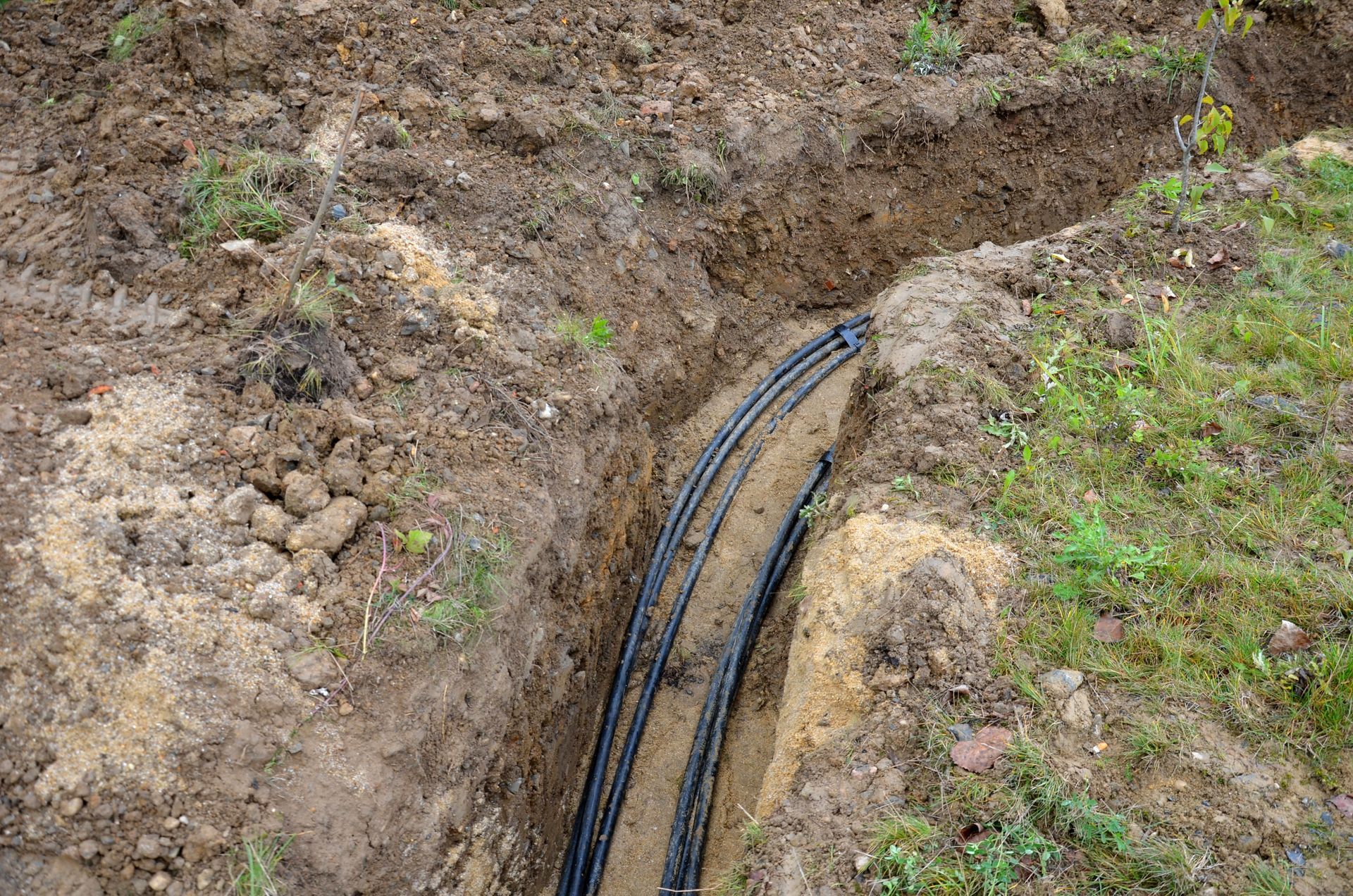
Precision Trenching That Simplifies Your Installation Work
Utility trenching for water, power, and service runs in Salem, Alabama and surrounding areas for homes, shops, barns, and outbuildings
When you need to run water, power, or other utilities to a shop, barn, or outbuilding in Salem, Smiths Station, Opelika or a neighboring community, the trench has to reach the right depth without tearing up more ground than necessary. Clean, straight trenches make it easier to lay pipe or conduit without kinks, stress points, or delays caused by uneven digging. Whether you are connecting a new structure or upgrading existing services, the quality of the trench affects how quickly the installation moves and how well the lines perform over time.
DT Dirtworks LLC provides utility trenching across Salem and surrounding areas, using equipment that minimizes surface disruption while maintaining the depth and width required for safe installation. The work suits residential properties, outbuildings, and small commercial sites where access and timing matter. You end up with trenches that are ready for pipe, conduit, or cable without additional cleanup or reshaping, and the service can be paired with backfill and grading to restore the surface after installation.
If you need trenching for a utility run in Salem or a surrounding area, contact DT Dirtworks LLC to review your site and schedule the work.
Clean Lines That Keep Installation on Schedule
Trenching begins with marking the route, identifying any existing utilities, and selecting equipment that matches the depth and soil conditions in Salem. You will see trenches cut to consistent width and depth, which simplifies pipe placement and reduces the chance of improper grade or alignment that could cause drainage or flow problems later. The work is done with attention to avoiding roots, rocks, and other obstacles that might interfere with the line or require rerouting.
After trenching is complete, you will notice clean edges and a stable base that supports the pipe or conduit without additional preparation. The trench is deep enough to meet code requirements and protect the line from surface loads, freeze damage, and accidental disturbance during future landscaping or digging. The surface disruption is limited to the trench path and immediate work area, leaving the rest of your yard or site intact.
The service also includes coordination with backfill and grading if needed, so the trench can be filled and leveled after installation without leaving low spots or uneven ground. This approach keeps your property usable and reduces the time between trenching and finished grading. Trenching can be scheduled to match other site work, allowing you to complete utility installation as part of a larger construction or land development project.
Homeowners and contractors planning utility runs often want to know how deep trenches need to be, what happens to the soil, and how the work affects other parts of the property, so this section covers the details that help you prepare.
Most questions come up before the first cut is made
If you need utility trenching in Salem that maintains safe depth, minimizes disruption, and keeps your installation work on schedule, reach out to DT Dirtworks LLC to discuss your project and coordinate timing with other site work.